
Bangladesh is one of the fastest growing economies in the AsiaPacific region, and also compared to other countries in the world. Both the government and Asian Development Bank (ADB) has also forecasted the economy to grow by 7.0% in FY2022, even in the aftermath of the Covid-19 pandemic.
One of the key indicators of a growing economy is the consumption of steel, which is considered as one of the primary drivers for growth. According to industry experts, there is a linkage between a country’s economic growth and growth in steel consumption. If GDP is expected to grow by 8%, the steel industry should grow by at least 16% per year.
The steel industry plays a fundamental role in not only driving economic growth, but also other complementary industries such as transportation, energy, heavy engineering and construction. Despite dynamic shifts in the global scenario, the steel industry of Bangladesh continues to be a source of employment for over 1 million people directly or indirectly throughout the country.
With an estimated market size of BDT 45,000 crore, the steel industry in Bangladesh is currently experiencing an upsurge in demand - the country’s local steel market has grown by 15 to 20 percent in the last few years. This growth is driven mostly by government spending on infrastructure projects, which accounts for 40% of steel consumption in Bangladesh. With the implementation of several mega projects, Bangladesh is on the fast-track of infrastructural development.
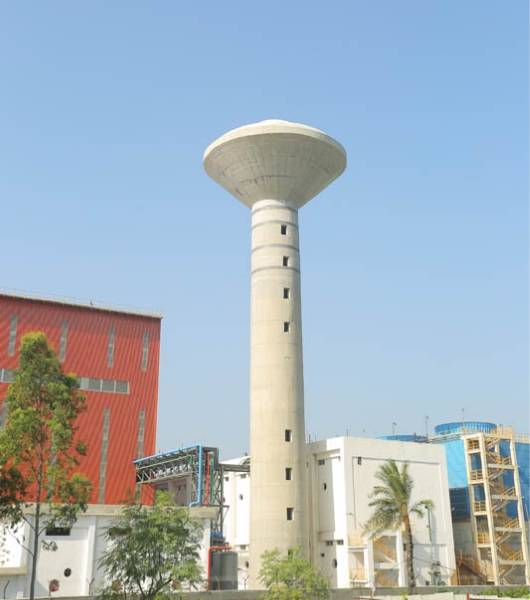
The steel sector will grow further riding on Bangladesh’s dense population, increasing urbanization, rising living standards, strong purchasing power, enhancing life expectancy rate, rapid construction of economic zones and large investments in infrastructure development have all driven growth in the construction sector and steel sector as well.
According to the SteelMint group, production capacity of the Bangladesh steel industry has more than tripled during FY14-15. Actual production is expected to double by 2022. Currently, Bangladesh exports 57.9 Million USD worth of iron and steel products and raw materials.
For the development of the economy, Bangladesh is digitizing itself for a more efficient economy. As the steel industry is inextricably linked to the economy, major players in the steel industry such as GPH are integrating technology in and across its manufacturing process to achieve higher output of steel products and meet the needs of a growing economy. This integration of technology in industrial processes - currently practiced by GPH - results in high-tech industries, better known as Industry 4.0.
According to the SteelMint group, production capacity of the Bangladesh steel industry has more than tripled during FY14-15. Actual production is expected to double by 2022. Currently, Bangladesh exports 57.9 Million USD worth of iron and steel products and raw materials.
For the development of the economy, Bangladesh is digitizing itself for a more efficient economy. As the steel industry is inextricably linked to the economy, major players in the steel industry such as GPH are integrating technology in and across its manufacturing process to achieve higher output of steel products and meet the needs of a growing economy. This integration of technology in industrial processes - currently practiced by GPH - results in high-tech industries, better known as Industry 4.0.
Digital Transformation - Industry 4.0
Industry 4.0 has become a popular term in recent years which is a great initiative introduced by the German Government in 2011. In simple terms, it refers to high-tech industries that utilize smart manufacturing integrated in smart factories. Smart factories use Internet of Things (IoT), cloud computing and analytics, and AI and machine learning in their production facilities and throughout their operations.
With sensors giving instant data, embedded software and robotics that collect and analyze data, smart factories make better decisions. It allows smart factories to produce more customized products with higher efficiency and reduced industrial environmental impact. This ultimately allows the manufacturing industry to enter the fourth industrial revolution, hence the term “Industry 4.0”.
In Bangladesh, GPH Ispat Ltd. was one of the first industry players to implement Industry 4.0 automation with state-of-the-art technology - Quantum Electric Arc Furnace & Winlink rolling technology - in steel melting, Refining & rebar rolling.
With this change, GPH Ispat intends to take advantage of dynamic technological developments, in order to optimize production more than ever before. Analyzing the large amounts of big data collected from sensors on the factory floor ensures real-time visibility of manufacturing assets and can provide tools for performing predictive maintenance in order to minimize equipment downtime.
GPH Ispat’s investment in technology to make smart factories is directly in sync with Bangladesh’s steel industry’s transformation to Industry 4.0, making GPH Ispat one of the pioneers who are leading the way.
In Bangladesh, GPH Ispat Ltd. was one of the first industry players to implement Industry 4.0 automation with state-of-the-art technology - Quantum Electric Arc Furnace & Winlink rolling technology - in steel melting, Refining & rebar rolling.
With this change, GPH Ispat intends to take advantage of dynamic technological developments, in order to optimize production more than ever before. Analyzing the large amounts of big data collected from sensors on the factory floor ensures real-time visibility of manufacturing assets and can provide tools for performing predictive maintenance in order to minimize equipment downtime.
GPH Ispat’s investment in technology to make smart factories is directly in sync with Bangladesh’s steel industry’s transformation to Industry 4.0, making GPH Ispat one of the pioneers who are leading the way.

GPH Ispat Limited is one of the leading integrated steel manufacturing companies in Bangladesh engaged in the manufacturing and trading of M. S. Billet and M. S. Rod.



© 2025 GPH Ispat Limited. All Rights Reserved.
Powered by Brandmyth Digital